With the awakening of national consciousness in the early years of the last century, a few notable efforts were made in British India to improve the system of education prevalent in India during that time. Gujarat Vidyapeeth (Sabarmati ashram) started by Mahatma Gandhi, Shantiniketan to bring the cultures of the East and West into universal harmony, Jamia Milia and the Gurukul Kangdi for preserving the cultural heritage of the nation keeping with the requirements of the modern age.
Inspired by the same spirit, Rajasthan Vidyapeeth was founded on 21st August 1937 by a renowned litterateur, educationist, a noted Gandhian, Reformer, Social Activist and a Freedom Fighter in true senses late Manishi Pandit Janardan Rai Nagar to uplift the downtrodden common masses in the Southern Rajasthan. Still the mission of the institution is to uplift the society, community development, vitalizing democratic values and restoration of culture through education.
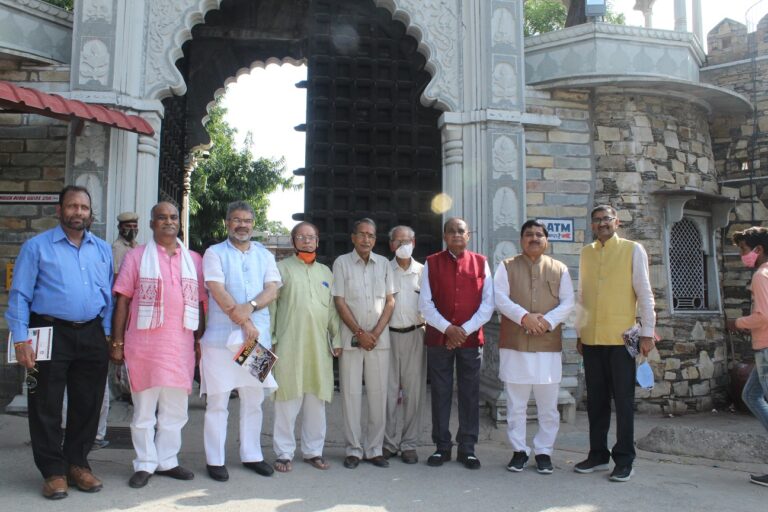
With the vision of “equitable knowledge empowerment of masses by blending the modern means with conventional values, execution of problem-oriented research leading to policy interventions and extension services linked with quality improvement in life of the deprived classes and marginalized group, especially tribal population”, the university has the strength of more than 10000 students and then 1000 faculty members. Seekers of good education come from all over India, mostly from around 500 km. area of Rajasthan. We have 3 campuses in Udaipur all three are big enough covering area of about 78 acres.
The University has received many awards few of them are National Excellence Award 2015 for Community Services Excellence, Public Folk and Cultural Award by Hon’ble President of India; FICCI Award for working in the field of Rural Development; and National Child Development Award by Hon’ble President of India. The University also got good ranks at national level by IIRF and Unirank. The University has also achieved University of the year 2021 from the academic insight and created a record of maximum participations in an online quiz while lockdown period of India due to COVID–19.
The Government of India and UGC conferred it the status of ‘Deemed-to-be University’ in 1987. Since then, it has been spreading the fragrance of a number of courses, including professional ones, for the benefit of our society.
The eminent persons who visited Vidyapeeth include Pandit Jawahar Lal Nehru, Shri Jai Prakash Narain, Shri Vinoba Bhave, Smt. Indira Gandhi, Dr. Rajendra Prasad and Dr. Radha Krishnan, Prof. Natrajan, Shri Chandi Prasad Bhatt, Shri Chandra Prakash Dwivedi, Shri Upendra Kushwaha, Shri Gajendra Singh, Shri Karan Singh of Kashmir etc. Col. James Tod completed his historic book ‘Annals and Antiquities of Rajputana’ during his stay in the campus of this institution.